
Equity trading volumes, both in the cash and derivatives segments, dropped in March amid wild swings in stock prices. The average daily trading volume for the cash segment (National Stock Exchange, or NSE, and BSE combined) fell by 16.3 per cent to Rs 1.07 trillion - the lowest since November 2023. Market players said the drop could have been sharper if not for the large block deals in companies such as ITC, Tata Consultancy Services, and IndiGo seen during the month.
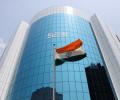
The market regulator's newly proposed selection criteria for the over Rs 400-trillion-a-day futures and options (F&O) market could pave the way for the entry of popular stocks such as Life Insurance Corporation (LIC) of India, Jio Financial Services, Zomato, Paytm, DMart, and Adani Energy into the derivatives segment. The Indian derivatives market, which accounts for most of the trading volumes, could see big churn with over two dozen exits from the current list of 182 stocks due to an upward revision in the eligibility thresholds.

The markets opened flat but have moved northwards on buying seen in select index pivotals
Infosys, TCS and Wipro gained 1-3% contributing the most to the Sensex gains.

The value of foreign portfolio investors' (FPI) holdings in the domestic equities reached $584 billion at the end of December 2022, which was 11 per cent lower from preceding year, according to a Morningstar report. This was largely on low return given by the Indian equities and exodus of foreign money from the domestic stock market. Going by the report, the value of FPIs investments in Indian equities dropped to $584 billion as of December 2022 as compared to $654 billion at the end of December 2021.
Equity investors became poorer by over Rs 8 lakh crore in five days of market plunge. The BSE benchmark has lost 2,062.99 points or 4 per cent in five trading sessions. On Thursday, the 30-share BSE benchmark tanked 585.10 points or 1.17 per cent to close at 49,216.52. Following the bearish trend, the market capitalisation of BSE-listed companies declined by Rs 804,216.71 crore to Rs 2,01,22,436.75 crore in five days.

Investors have lost over Rs 5.55 lakh crore in four days of declines in the domestic equity markets. Rising domestic COVID-19 cases and selling in RIL and banking stocks dragged down the 30-share BSE Sensex by 562.34 points or 1.12 per cent to 49,801.62 on Wednesday. In four days, the benchamark has fallen by 1,477.89 points or 2.88 per cent. The market capitalisation of BSE-listed companies has tanked by Rs 5,55,400.52 crore in four days to reach Rs 2,03,71,252.94 crore.

Benchmark stock indices Sensex and Nifty closed higher for a second straight session on Monday following buying in index majors Reliance Industries, ICICI Bank and recovery in global markets.

Investor wealth slumped by Rs 3.7 lakh crore on Monday, as the equity market recorded its biggest single-day fall in two months.

The move to demerge the hotel business into a separate entity by ITC has brought back focus on hotel stocks, which have already seen a good run thus far in fiscal 2023-24 (FY24). Analysts believe there could be more gains in store over the next one year for the stocks in this sector, but suggest investors put in money on a correction only from a long-term perspective. Hotel stocks, according to A K Prabhakar, head of research at IDBI Capital, have seen a good run as travel picked up post Covid in India. Not only have the room rents increased, the occupancy, too, has surged.

Indian equity markets have a limited upside potential in the near-term as they negotiate the ensuing cyclical slowdown, wrote analysts at Nomura in a recent coauthored report led by Saion Mukherjee, their managing director and head of equity research for India. He, however, believes that the foundations are in place for sustainable growth over the medium-to-long term, and hence suggests a 'buy on dips' strategy to equity investors. As an investment strategy, Nomura prefers domestic-oriented sectors and companies over exporters, and prefers stocks that provide valuation comfort. Industrials and banks are their overweight sectors, while IT services and consumer discretionary are their underweight sectors.
The markets continue to trade at the higher level on the back of buying in scrips across sectors
The main losers on the Sensex were GAIL, BHEL, M&M, Tata Power, SBI, Coal India, ONGC and HDFC.
The markets have opened on positive note despite of worries in Middle East countries and mixed trade in Asian markets
Coal India moved higher by over 3% to Rs 263, despite of weak April-June (Q1FY14) results, on expectation of earnings improvement by going forward.

'Some risks to this market rally include inflation, erratic weather conditions, rising crude prices, slowing global growth and the resultant impact on domestic exports, escalation in geopolitical tensions.'

'Over the next 12 months, it will be difficult to make 15 to 20 per cent return in the markets as the valuations appear stretched.'
The Sensex closed flat at 11,149.17 up 4 points. The Nifty gained 6 points to close at 3260.
The main gainers on the Sensex were Hindalco, JSPL, SBI, Maruti Suzuki, GAIL, L&T.

Investors' wealth on Tuesday jumped by over Rs 2.51 lakh crore, in tandem with a sharp recovery in equities after four days of heavy declines. The 30-share BSE Sensex opened on a weak note and tumbled 581.93 points or 1.10 per cent to 52,260.82 during the day amid firming oil prices and relentless selling by foreign institutional investors. Amid bouts of volatility, the benchmark touched a high of 53,484.26 and a low of 52,260.82 during the trade. It finally settled at 53,424.09, higher by 581.34 points or 1.10 per cent.

Broader markets broke the winning streak and ended lower, underperforming the benchmark indices

Among the Sensex firms, Bajaj Finserv, Tata Motors, Asian Paints, ITC, IndusInd Bank, State Bank of India, Tata Steel, Wipro, Infosys and Maruti were the major gainers. Tech Mahindra, HCL Technologies, Kotak Mahindra Bank, Titan and Larsen & Toubro were the major laggards.

The outflows could be a result of a mix of factors led by the underperformance of some of the larger funds amid elevated return expectations.

Public-sector enterprise stocks have seen a good run thus far in 2023-24 (FY24), with the S&P BSE PSU Index surging by over 26 per cent during the period, compared to an 11 per cent increase in the benchmark S&P BSE Sensex.

Smaller stocks continue to shine at the bourses. The BSE MidCap index is up 18 per cent since the beginning of January this year against a 5 per cent rise in the Sensex during the period. With the current rally, the mid-cap index has doubled in value since the end of March 2020 against a 70 per cent rally in the Sensex during the period. On Tuesday, the mid-cap index closed at 21,232, as compared to 17,941 at the end of December 2020. In the same period, the benchmark index moved from 47,751 to 50,193.

So far in September, the S&P BSE Small-cap index has gained nearly 3 per cent as compared to a modest 0.2 per cent dip in the S&P BSE Sensex.

The National Stock Exchange (NSE) on Tuesday said it has halved the lot size for trading derivatives contracts for the Nifty 50 index to 25 and also reduced the lot sizes of the Nifty Financial Services and Nifty Midcap indices as part of its periodic revision. "All contracts, i.e. weekly, monthly, quarterly, and half-yearly expires available for trading from the trade date of April 26, 2024, onwards will be with the revised market lot size," the NSE said, referring to applicability of the change for Nifty 50. The lot size in the derivatives segment refers to the fixed number of shares in a unit or group for which contracts are traded.

Equity indices staged a pullback on Tuesday after three days of declines as investors scooped up IT, metal and consumption stocks amid a largely positive trend overseas. A recovery in the rupee added to the momentum, traders said. Overcoming a wobbly start, the 30-share BSE Sensex climbed 274.12 points or 0.45 per cent to settle at 61,418.96.

Eighty per cent, or 60 of the 75 companies that made their debut on the mainboard this financial year, ended their listing day with gains.
At first glance, the numbers show a mixed trend.

In the Sensex pack, NTPC, Tata Steel, SBI and IndusInd Bank were among the major laggards. In contrast, Wipro, HCL Tech, Mahindra & Mahindra and Nestle were among the nine stocks that defied the trend.

Active largecap funds, which have the toughest job in terms of outperforming the benchmark, did better in 2023 as their bets in the mid and smallcap stocks paid off.

Investors' wealth soared by Rs 10.58 lakh crore in three days of the market rally, where the BSE benchmark jumped over 2 per cent, and hit an all-time high on Monday. Extending its winning momentum to the third day running, the 30-share BSE Sensex jumped 363.20 points or 0.49 per cent to settle at 74,014.55. During the day, it zoomed 603.27 points or 0.81 per cent to hit its record high of 74,254.62.
Among the Sensex firms, Tata Steel, Tata Motors, Asian Paints, Wipro, State Bank of India and Larsen & Toubro were the major gainers. ICICI Bank, NTPC, Axis Bank and Mahindra & Mahindra were among the laggards.


Stock markets would take cues from the biggest event of the week -- the US Fed interest rate decision, besides tracking the trends in global markets and trading activity of foreign investors, analysts said. Last week, a heavy decline in smallcap, midcap firms, foreign fund outflows and elevated crude oil prices in the international market dented investors' sentiments. Experts said equity markets may remain volatile in the near-term amid a host of global central bank's monetary policy decisions lined up during the week.

China has stayed on top for two consecutive months in the MSCI Emerging Markets Investable Market Index (EM IMI), after ceding the position to India in August. At the end of October, China's weight in the key EM gauge stood at 24.72 per cent, up from 21.58 per cent at the end of August. India's weight during this period has slipped to 20.42 per cent from 22.27 per cent.

Investors' wealth eroded by Rs 6 lakh crore in a single day on Wednesday as the BSE benchmark Sensex tumbled over 790 points. The 30-share BSE Sensex fell by 790.34 points or 1.08 per cent to settle at 72,304.88. During the day, it slumped 872.93 points or 1.19 per cent to 72,222.29.

Domestic mutual funds (MFs) have kept their faith in the Indian stock market despite multiple headwinds all through 2022-23 (FY23), with their net flows into equities crossing the Rs 1.5-trillion mark for the second consecutive financial year. MFs pumped a net Rs 1.53 trillion into equities till March 1, 2023, the Securities and Exchange Board of India (Sebi) data shows, as compared to Rs 1.72 trillion in FY22. Since FY15, MFs have been net buyers of equities, except in FY21, when they sold a net Rs 1.21 trillion.
Benchmark equity indices Sensex and Nifty closed higher on Friday after two days of fall, helped by buying in metal, telecom and auto stocks amid a firm trend in global markets. Automakers led by Maruti Suzuki India, Hyundai, Mahindra & Mahindra reporting robust wholesales of passenger vehicles and GST collections crossing Rs 1.50 lakh crore for the third straight month in May also added to the optimism. The 30-share BSE Sensex climbed 118.57 points or 0.19 per cent to settle at 62,547.11.
 © 2026 Rediff.com - Advertise with us - Disclaimer - Privacy Policy - Sitemap - Feedback - About us - Terms of use - Grievances